The Rise of Tap-to-Pay on Mobile in Canada: What Merchants Should Expect
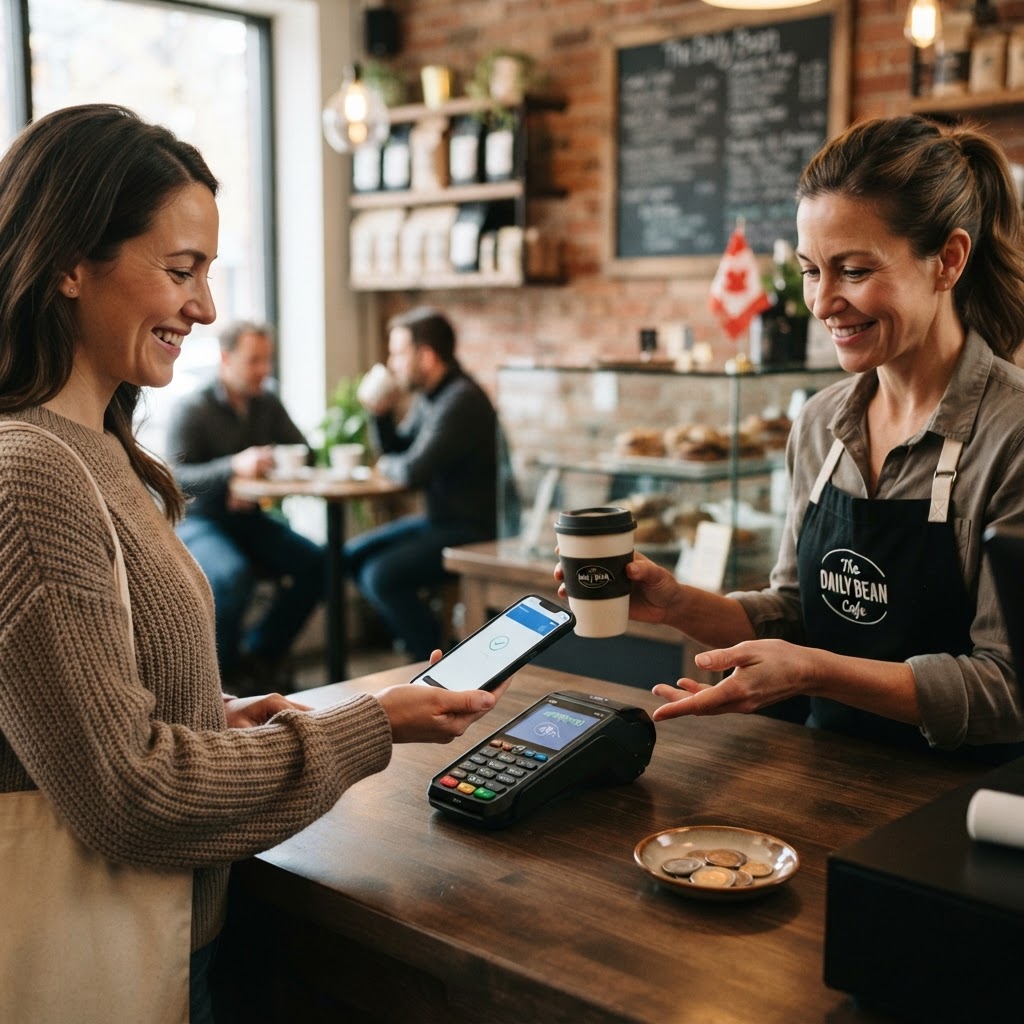
Contactless payments Canada have become the standard for modern commerce, with recent data from Payments Canada confirming that contactless transactions now account for 58% of all retail payment volume. For Canadian merchants, this shift represents a permanent change in consumer behaviour, requiring reliable hardware and transparent processing to maintain healthy margins.
Key takeaways
- Dominant Market Share: Contactless payments now represent 58% of all retail transactions in Canada, according to 2025 data from Payments Canada.
- Consumer Preference: Six in 10 Canadians now prefer to leave their physical wallets at home for short trips, relying instead on mobile digital wallets.
- High Adoption: Mastercard reported that contactless payments accounted for 75% of transactions on its network in 2025.
- Efficiency Gains: Modern payment processing allows merchants to accept Interac Debit, credit cards, and mobile wallets through a single, unified interface.
Why is the shift to mobile contactless payments accelerating?
The shift to mobile contactless payments is accelerating because Canadian consumers increasingly prioritize the convenience of digital wallets over physical cards. With smartphone ownership among Canadians aged 15 and older reaching 84% according to Statistics Canada, the infrastructure for mobile payments is already in the hands of your customers. When a customer uses Apple Pay, Google Pay, or Samsung Pay, they are essentially tokenizing their credit or debit card, providing a secure and rapid checkout experience. This transition is supported by the widespread availability of NFC-enabled terminals, which allow merchants to process these transactions as easily as a standard card tap. As consumer familiarity grows, the expectation for "tap-and-go" capability has moved from a luxury to a baseline requirement for any business operating in the Canadian retail or service space.
How do contactless payments impact merchant transaction costs?
Contactless payments impact merchant transaction costs primarily through the underlying network fees associated with different payment methods, such as Interac Debit versus credit cards. While the convenience of mobile wallets is undeniable, merchants must be wary of "hidden" fee tiers that some processors use to inflate the effective rate of these transactions. For example, some providers may bundle contactless fees into higher-cost categories, masking the true cost of processing. At Tap2Pay, we believe in total transparency; we provide clear, flat-rate or interchange-plus pricing models that ensure you aren't paying unnecessary premiums for standard contactless transactions. By choosing a partner that offers transparent pricing with no hidden fees, many Canadian merchants find they can save 15-30% on their monthly processing costs compared to legacy providers.
What should merchants look for in modern payment hardware?
Merchants should look for modern payment hardware that supports all major contactless protocols, including Interac Debit, Visa, Mastercard, and digital wallets, while offering robust security features. The industry has moved toward smart terminals, such as those powered by PAX, which provide a seamless interface for both the merchant and the customer. When selecting your equipment, prioritize devices that offer reliable connectivity and the ability to handle high-volume traffic without latency. It is also vital to ensure your hardware is future-proofed for evolving security standards. At Tap2Pay, we supply advanced PAX smart terminals designed to handle the high-speed demands of the Canadian market. Because we focus on providing the right technology for your specific business needs, you avoid the common pitfall of overpaying for hardware features you don't actually use.
The evolution of Interac and mobile integration
The role of Interac in the Canadian landscape has evolved from a simple debit network to a sophisticated digital ecosystem. With Interac Debit now supporting mobile transactions, merchants can offer customers a cost-effective way to pay directly from their bank accounts. According to Payments Canada, Interac Debit saw seven billion transactions in the most recent reporting period, highlighting its critical importance to the Canadian economy.
For merchants, the ability to accept Interac via mobile is a strategic advantage. It provides a lower-cost alternative to credit card processing while meeting the consumer demand for digital-first payment options. If you are currently paying high percentage-based fees on every transaction, it may be time to review your pricing structure to ensure you are leveraging the efficiency of the Interac network.
How to set up contactless payment acceptance
- Assess your current hardware: Ensure your existing terminals are NFC-enabled. If you are using outdated equipment, contact a provider to upgrade to modern PAX smart terminals.
- Verify your merchant account settings: Confirm with your processor that your account is configured to accept both contactless cards and mobile digital wallets (Apple Pay, Google Pay).
- Test the connection: Perform a test transaction using a mobile wallet to ensure the terminal recognizes the NFC signal and processes the payment correctly.
- Train your staff: Ensure your team understands how to guide customers to the contactless reader, which is often located on the side or top of the terminal.
- Monitor your statements: Regularly review your monthly processing statements to ensure you are being charged the correct rates for contactless transactions and that no hidden fees have been added.
Frequently Asked Questions
Are contactless payments secure for my business?
Yes, contactless payments are highly secure. They use tokenization, meaning the customer's actual card number is never transmitted or stored during the transaction. This reduces the risk of data breaches and fraud, providing a safer environment for both the merchant and the customer compared to traditional magnetic stripe swipes.
Do I need to pay extra to accept mobile wallets?
Generally, no. If your terminal is already set up to accept contactless cards, it is likely already capable of accepting mobile wallets like Apple Pay or Google Pay. However, you should verify your fee structure with your processor to ensure they are not charging "premium" rates for mobile transactions.
Can I accept contactless payments on my phone?
Yes, with the rise of "Tap to Pay on Android," many merchants can now use compatible smartphones as payment terminals. This is an excellent solution for mobile businesses, pop-up shops, or service providers who need to accept payments on the go without investing in traditional hardware.
Conclusion
The rise of contactless payments Canada is not a passing trend; it is the new reality of the Canadian retail landscape. By understanding the mechanics of these transactions and ensuring your business is equipped with transparent, efficient processing, you can improve your bottom line while meeting customer expectations. Whether you are looking to upgrade your our terminals or simply want to ensure you aren't overpaying for your current volume, Tap2Pay is here to help. We provide the transparent, Canadian-focused support you need to thrive. Get a free quote today and see how much you could save.
Reviewed by Tap2Pay's Canadian merchant services specialists. Updated 2026.